The human body is connected to each other in a special knot or the cartilage can be used to protect both ends of the cartilage.
What is the pain in the joints?
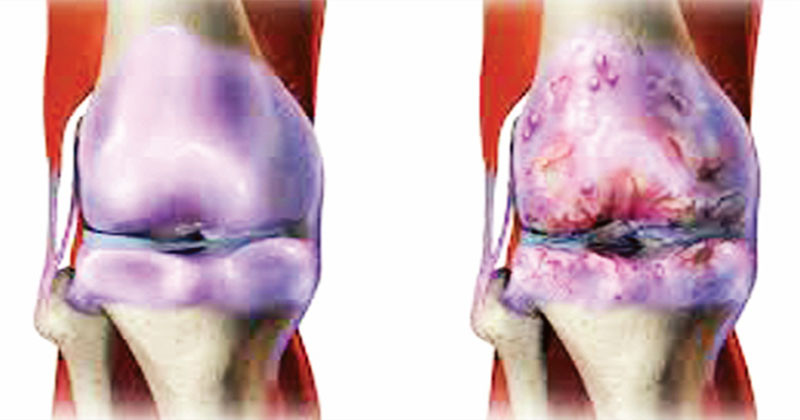
When the cartilage in the sphere is slowly shriveled, one end of the hue comes very close to the other end, causing pain, swelling, stiffness, negligence and distortion of the husk. It is progressive, that is, the same is the progressive, that is, the same is the progressive, that is, the same.
Causes of stool pain: Osteoarthritis causes multiple. Some of them are preventable, some are not.
1) Increase in the stools - As soon as the urinary tract is released, the cartilage of the body naturally goes to the stool.
2) Excessive weight- If you are overweight, the pressure on the knees, waist and spine is too much. Every 1 kg of excess weight creates an additional pressure equal to 3-4 kg of the knee.
3) Genetic or hereditary factors - If there is a family, the risk is very high.
4) Injury of previous joints - sports injuries, accidents, ligaments tear, meniscus injuries etc. are osteoarthritis or later.
5) Excessive use:
● Kathic work,
● Higher fluctuations,
● Long-term work,
● Carrying heavy weights.These can damage the knees/waist.
6) Zombie structural problems- Curved legs, nokki, congenital disease etc.
7) Inflammatory diseases – If not treated like psoriatic arthritis, rheumatoid arthritis, it can cause urinary tract infections.
Symptoms - Symptoms of osteoarthritis start slowly.
1) Pain-most common symptoms: walking, standing, lifting or weighting, but a little less at rest
2) Got hard ● 15-30 minutes after waking up in the morning, ● Long sitting or resting after rest.
3) swollen in the groin
4) Moving sound - when walking, a slurping sound.
5) Naschijhar limitation- ● Difficulty in folding the knees ● If the legs are sitting on the feet, it will be difficult ● Pain in the waist down.
6) Distortion- Diseases or knees can become English ‘O’ shaped or ‘X’ shaped.
7) Reduced movement and difficulty in daily work - rising, long walk, prostration in prayer, these are all difficult.
Test- The main way of diagnosis is history, physical examination and X-ray.
1) X-ray-Justent space decrease, small squirrels are formed, sclerosis under the skeleton, thorns are formed, these are the classic symptoms of osteoarthritis.
2) MRI (when needed)- Cartilage cyst, meniscus/ligament injury, soft tissue problems. Only in severe cases or before surgery, MRI is done.
3) Blood test (usually unprotected) This disease does not have any special changes in blood tests. If other diseases are suspected such as rheumatoid arthritis if suspected - RF, anti-CCP, ESR and CRAP should be done.
1. 1. 1. 1. 1. 1. 1. 1. 1. 1. 1. 1. 1. 1. 1. 1. 10. 10. 10. 10. 10. 10. 10. 10. 10. 10. 10. 10. 10. 1
non-medical or life-based treatments
1) Weight Loss - This is the most effective way to lose weight 5-10% The pain is much less even if you lose weight.
2) Bathum - Anatomy cartilage blood circulation, muscle strengthening. Suitable Baitum- ● Kaking/Stationary Cycling, ● Walking, ● Water-Basty or Akota Therapy, ● Hemistring Stretching. Hemistring Stretching.
3) Rest and protection - Reduce long balance, do not lift heavy objects, lower slimming.
4) Warm bake / cold baking - ● Cold bake when it hurts, ● Hot bake if stiffness
5) Brace or support - Knee brace, petella strep, good insole can be used as per the advice of the doctor.
However, it is not right to use the medicine to reduce the pain and prevent the pain.
1) Painkillers- Paracetamol (Mild Pain), more pain and other NSAIDs but should be taken carefully in kidney/heart disease.
2) Topical Pain Relieving Ointment – Diclofenac or Ketoprofen is very effective and relatively safe.
3) Glucosamine and chondrotin - scientific evidence is limited, but some patients are benefited.
4) Vitamin D and Calcium - Keep the body strong.
Injection treatment 1) Steroid injection- Pain and inflammation are reduced quickly, it is cleared once in 3-4 months, it is not right to give it again and again.
2) Heluronic acid – Brings back the oily feeling, reduces pain, is very beneficial for some patients.
Surgery- When the pain is unbearable, the walking is stopped, then 1) If you do arthroscopic debridement, the initial condition is the benefit of some patients. 2) High tibital osteotomy - fixes the structure of the knee, is good for young patients. 3) Total knee or hip replacement- Advanced treatment, normal walking free of pain is possible, but there is also a high cost of surgery, there is also a risk of surgery.
Prevention: If you follow some rules before starting osteoarthritis, you can prevent it from a large extent.
✔ Weight control,
✔ Nitmet Batam,
✔ Nutrient foods (vitamin D, Calcium),
✔ Proper posture of movement,
✔ Not sitting continuously,
✔ Sport is the right protection,
✔ Avoiding smoking,
✔ Reduce sugar and extra-processed food.
Remedy: Home Management and Long-term Planning
1) Eating habits ● Omega-3 (fish, nuts, flaxseed), ● Antioxidant (greens, fruits), ● Low calorie food, ● Fast food, excess salt reduction.
2) Daily tips- ● Lower knee bend, ● Avoid sitting on the floor while low, ● Use of cheetar if you have problem in sajda in prayer, ● Sometimes breaks when walking long times.
3) Mental well-being – Long-term pain anxiety or meditation, with light meditation.
4) Physiotherapy
● Ultrasound therapy
● Tens
● Balance Training
They are effective in reducing pain.
Summary summary:
Bone joint pain (osteoarthritis) is a common, but long-term problem. Although it is not completely cured, the patient can live a completely normal life through surgery with proper lifestyle, weight, weight control, medicine and surgery. And the patient can live a completely normal life in the initial stage and if he is caught in the initial stage, he will slow down a lot.